Team — who has access to what
The team page is where you manage who else uses HalloMia and what they are allowed to see. This is more than convenience: recordings and transcripts contain customer data, and who can reach them should be a deliberate decision — not one that happens because a login was passed around.
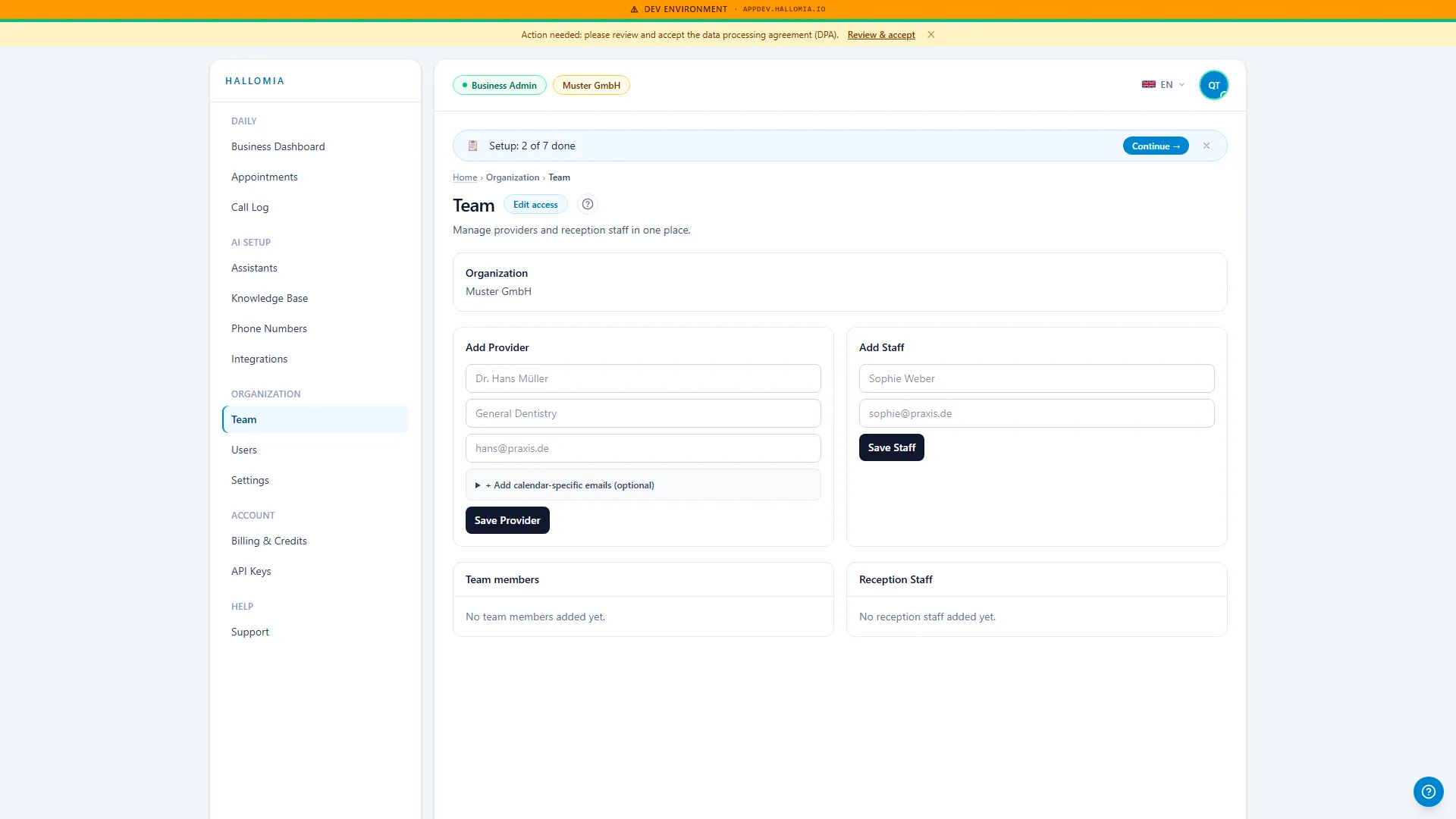
What does the team page show?
Section titled “What does the team page show?”It lists the members of your organisation with their role. The role decides which areas someone can open — from day-to-day work through to administrative areas such as billing or API access.
What can I do from here?
Section titled “What can I do from here?”- Invite a colleague instead of sharing credentials.
- Change someone’s role when responsibilities shift.
- Withdraw access when someone leaves the company.
- Understand why someone cannot see a page — usually it is the role, not a fault.
Which role should I give someone?
Section titled “Which role should I give someone?”The most sparing one that still lets them work. Someone who follows up on calls and checks appointments does not need access to billing or API keys. That separation costs nothing and limits the damage if something goes wrong. A role can always be widened later — the reverse is more uncomfortable, because data may have been seen in the meantime.
Why can a colleague not see a page that I can?
Section titled “Why can a colleague not see a page that I can?”Because their role does not include that area. That is not a fault; it is access control doing its job. Check the role on this page and adjust it if the access belongs to the job. Note that a change takes effect once the person signs in again.
Why shouldn’t I just share credentials?
Section titled “Why shouldn’t I just share credentials?”Because then it is no longer possible to tell who did what, and because someone leaving no longer allows a clean cut — you would have to change the password and redistribute it to everyone else. A separate invitation per person takes a moment and solves both for good. Recordings and transcripts are only delivered to signed-in members anyway; a shared account undercuts exactly that protection.